Spring Semester Elective 2027
12 - 15 credits
 Select a Program
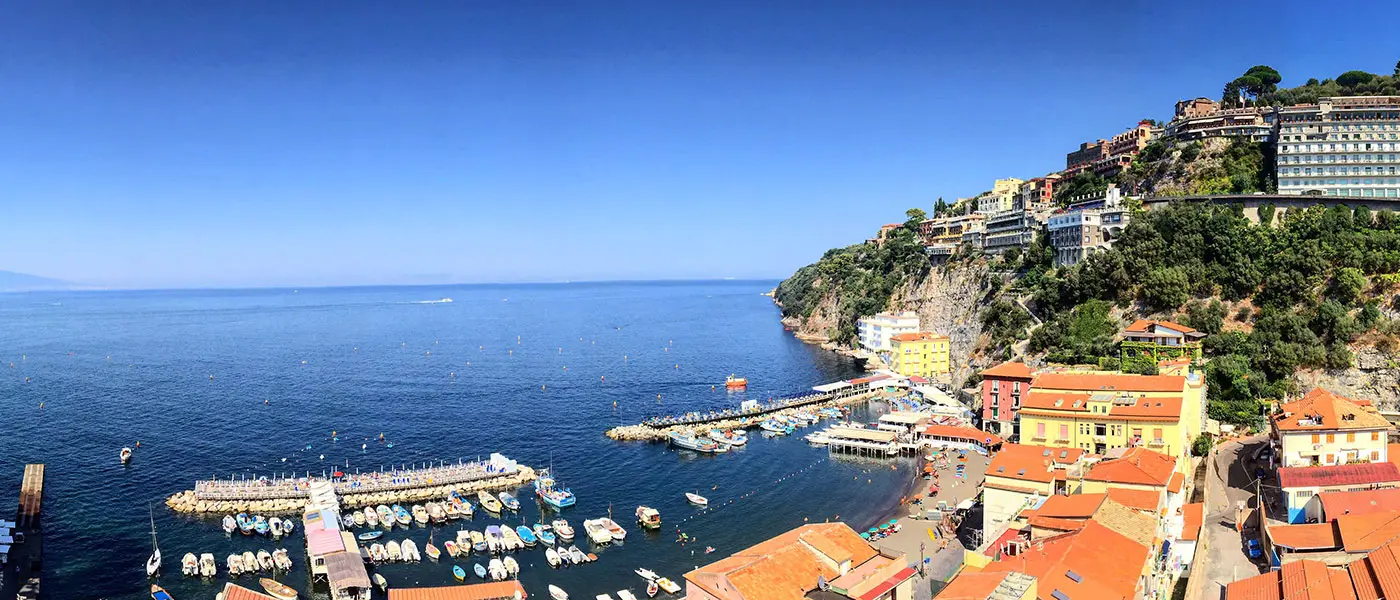
SAI students at Sant’Anna Institute spend a semester integrating themselves into the small beachside town for an unforgettable experience. Semester students enroll 4 to 5 elective courses from the variety of course offerings, for a total of 12 - 15 credits. Students can also choose to complete a part-time 3 or 6 credit internship alongside regular coursework. Motivated students also have the option of enrolling in the Honors Research Semester, for a deeper dive into a particular subject.
Highlights
- Complete an internship alongside coursework
- Join various service-learning opportunities
- Family homestay or apartment housing available
Program Dates
January 24, 2027 – May 8, 2027
Application open until: October 15 2026
Application Requirements
Complete online application
Personal statement (300-500 words)
Official transcript
Passport scan (photo page)
Italian privacy consent form

Eligibility Requirements
Age: 18+
Academic Year: High school graduate or above.
Cumulative GPA:* 2.5 (on a 4.0 scale)
* contact SAI if you don’t meet requirements
Arts and Humanities | Art History
Arts and Humanities | Creative Writing
Arts and Humanities | Cultural Studies
Arts and Humanities | Fine Art
Arts and Humanities | Italian Cinema
Arts and Humanities | Philosophy
Business Studies and Economics | Business
Business Studies and Economics | Economics
Business Studies and Economics | Marketing
Business and Economics | Management
Communication | Communication
Cultural Studies | History
Engineering | Engineering
Italian Studies | Italian Language
Italian Studies | Italian Literature
Natural and Health Sciences | Health Science
Sciences and Natural Sciences | Computer Science
Sciences and Natural Sciences | Natural Science
Social Sciences | Anthropology
Social Sciences | Business
Social Sciences | History
Social Sciences | Political Science
Archaeology studies past cultures and societies through their material remains. This course provides a basic introduction to the discipline, focusing on the study of some major Roman cities destroyed by the eruption of Vesuvius in 79 AD. The program combines archaeological study with the analysis of the historical, economic, and social aspects of Roman culture of the era. Students participate in several site visits to examine the remains and reconstruction of the ancient cities.
Please note that all courses are subject to adequate enrollment; therefore, it is important to get additional courses approved.
Art is the highest expression of a culture. Political, historical, and social changes lie at the heart of art. Works of art reflect the ages in which they are produced and often serve as tools to convey messages. During our classes, we will focus on the development of art over the centuries and how it affects today’s artists. We will have a brief review of the main artistic movements, from ancient Greece to Italy’s Baroque period.
Please note that all courses are subject to adequate enrollment; therefore, it is important to get additional courses approved.
This course will introduce students to the process and techniques of creative writing (focusing on travel experiences). Students will experiment with various types of writing, including fiction and poetry. Class readings will expose students to various writing styles and provide examples of other writers’ successes and strategies. Class time will be spent discussing the writer’s craft, the assigned readings, and student writing.
Please note that all courses are subject to adequate enrollment; therefore, it is important to get additional courses approved.
This course will explore a series of texts and films that present and focus on female Neapolitan protagonists. We will see six films and read six novels, five of them written by Neapolitan women writers, and one by an American novelist about a British woman who, transplanted to Naples, caused one of Europe’s biggest scandals during the Napoleonic wars. These texts and films will give us ample fodder to follow the history of the city and the role that women, as well as women writers and one filmmaker, have played in their own self-definition.
Please note that all courses are subject to adequate enrollment; therefore, it is important to get additional courses approved.
A survey of selected masterpieces, translated into English, which have influenced the evolution of various world cultures over several centuries. Works studied might include Gilgamesh, The Odyssey, The Ramayana, The Koran, Japanese Noh drama, and African literature.
Please note that all courses are subject to adequate enrollment; therefore, it is important to get additional courses approved.
This course is offered to students enrolled at the Sant’Anna Institute as part of the study-abroad program based in Sorrento, Italy. Lectures and field sketching sessions are centered on drawing on location as the best way we have to increase our capacity to observe and to understand reality. An object, a tree, a person, cities or landscapes: during everyday life or while traveling, journaling and sketching from real life is a profound and lasting experience. While drawing, we learn to see, and we can select information and highlight details better than we could with a camera. Students will discover Sorrento, visiting Naples or surrounding archaeological sites while recording their observations in a travel sketchbook. Tips and examples will be given on sketching on-location techniques as an introduction to pen-and-ink drawings and watercolors. Freehand drawing and location drawing, as basic and complementary skills, are recommended not only among architects, visual artists, animators, and graphic designers but also in disciplines such as archaeology, history, zoology, botany, and geology. Classic drawing warm-up exercises, as suggested by authors such as Kimon Nicolaides or Betty Edwards, will also help beginners to break the ice with life drawing and get the most out of the experience. The final assignment will be a sketched reportage in which each student will describe their life and experiences in Sorrento, using images and words.
Please note that all courses are subject to adequate enrollment; therefore, it is important to get additional courses approved.
The course introduces the student to the world of Italian Cinema. In the first part, the class will analyze Neorealism, a cinematic phenomenon that profoundly shaped the ideological and aesthetic norms of film art. In the second part, we will concentrate on the films that mark the decline of Neorealism and the emergence of the talent of “new” auteurs such as Fellini and Visconti. The last part of the course will be devoted to cinema from the 1970s to the present to examine the latest developments in the Italian industry. The course is a general analysis of post-war cinema and a parallel social history of this period using films as “decoded historical evidence”. Together with masterpieces such as “Open City” and “The Bicycle Thief”, the screenings will include films by Italian directors of the “cinema d’autore”, including “The Conformist”, “Life is Beautiful”, and “Le conseguenze dell’amore”.Students express their opinions, make their own criticisms, and complete written assignments.
Please note that all courses are subject to adequate enrollment; therefore, it is important to get additional courses approved.
An introduction to the discipline of philosophy. This course will cover a representative selection of texts and problems in the history of philosophy. The course will address the nature of philosophical inquiry and the methods it employs. Topics to be discussed include the foundations of ethics, the sources and limits of knowledge, and historical approaches to metaphysical speculation.
Please note that all courses are subject to adequate enrollment; therefore, it is important to get additional courses approved.
This course explores the religions of ancient Greek and Roman society from their earliest beginnings to the end of paganism and the emergence of Christianity. We will try to ask questions like: How did Greeks and Romans conceptualize the divine and their relationship to it? How was ancient religion actually practiced? How does religion relate to myth and ritual? How did religion and politics interrelate? What exactly were the alternatives to civically practiced religion we call mystery cults? Who were the critics of ancient religions, and what was the substance of their criticisms? What was the distinction between magic and religion? These fundamental questions (and many others) will concern us in this course. While the course follows a broadly chronological outline, individual lectures concentrate on specific themes, such as forms and places of worship, philosophy and religion, death and afterlife, magic and the concept of conversion. The course is designed to introduce the tenets, beliefs, and certain spiritual practices of Classical antiquity and to investigate the social, cultural, and political background of which ancient religion was part. Students will benefit from attending their study abroad program in Sorrento, in the middle of ancient Magna Graecia.
Please note that all courses are subject to adequate enrollment; therefore, it is important to get additional courses approved.
The course aims to provide students with the analytical and conceptual tools to understand how the EU functions, as well as the impact of different policies on the European business environment. In particular, the course will focus on the framework that companies must face when doing business in Europe. At the end of the course, the student will be able to do the following: analyze the origins of the EU, its history, and its development up to enlargement. Identify important steps in EU integration, name EU institutions, and understand how they interact with one another. Analyze the impact of the social and cultural influences brought about by the enlargement of the EU. Determine how business and trade are conducted, both internally and externally, by EU organizations. Conduct a sustainable business analysis (SWOT) for a specific industry sector operating in Italy. Analyze how companies should respond to and position themselves strategically and operationally in response to key issues in Europe’s evolving sustainable business environment.
Please note that all courses are subject to adequate enrollment; therefore, it is important to get additional courses approved.
The focus is the study of the entrepreneur and the entrepreneurial start-up process. Areas of concentration include the search for new venture opportunities, the evaluation of the new venture’s viability and attractiveness, the determination of the resources required and their sources, and the development of a business plan appropriate for presentation to funding sources.
Please note that all courses are subject to adequate enrollment; therefore, it is important to get additional courses approved.
The course presents tourism concepts related to food and geography, using Italy as a case study. The course is relevant to students of all backgrounds, but it has been designed specifically for students of hospitality, business, and culinary arts. Students will study international organizations operating in tourism (i.e., WTO) and the different types of tourism, with a particular emphasis on paid to sustainable tourism. Students will be asked to investigate the tourism geography of Italy, becoming familiar with the most important tourist sites in Italy and Campania (through several excursions). The third module of the course will be dedicated to a very important form of tourism in Italy, particularly in the Campania Region: Food and Wine Tourism.
Please note that all courses are subject to adequate enrollment; therefore, it is important to get additional courses approved.
Covering all the key topics in the sports marketing curriculum, including consumer behavior, market research, promotions, products, pricing, sponsorship, business ethics, technology, and e-marketing, the course introduces core theory and concepts, explains best practices, and surveys the rapidly changing international sports business environment.
As a result, part of the course will be dedicated to the social significance and commercialization of sport; the use of new technologies and organizational structures; and the involvement of various stakeholders, all of which matter more today than ever before. This course addresses the key influence of stakeholders on the activities of sports organizations, taking into account territorial differences worldwide. This course also highlights the key characteristics of managing sports organizations as opposed to other organizations. These include strategic management and the setting of long-term goals, such as sporting success, sustainable funding, youth training, and community building. A strategic model will be presented for these goals and stakeholders in the context of sport, along with research-based case studies that identify the critical factors in the strategic management of successful and unsuccessful sports organizations. The delivery of this course includes live lectures, class discussions, case studies, field trips, and the application of the marketing models studied to real-world cases.
The course is recommended for students who have already taken a marketing course at their home university.
This course is an introduction to microeconomics, the field of economics that examines issues affecting individual markets, firms, and households. Students learn about profit maximization, consumer theory, factor markets, the public sector, and the distribution of income. A significant portion of the course is devoted to the study of markets, futures markets, and society’s attempts to improve market outcomes across various market structures, including perfect competition, monopoly, monopolistic competition, and oligopoly.
Please note that all courses are subject to adequate enrollment; therefore, it is important to get additional courses approved.
This course provides an introduction to basic marketing concepts. Topics include the marketing mix, new product development, consumer behavior, customer relationship management, strategic planning, and e-commerce. Students will develop a comprehensive marketing plan and apply course concepts to real or imaginary products.
Please note that all courses are subject to adequate enrollment; therefore, it is important to get additional courses approved.
Hospitality is one of the largest service industries in the world. This course is about hospitality management and will provide an overview of basic professional management and illustrate customer service in the major areas of hospitality management, and segments of travel and tourism. The course will have a focus on the characteristics of the Italian market. Italy is one of the most popular global tourism destinations, and differently from other markets the local hospitality industry is still largely dominated by independent operators with limited presence of international groups and brands. The course will illustrate the current approach and methodologies for management of hotels and other tourism organizations. The key elements of service management and customer experience will be illustrated with examples, case studies and meetings with guest speakers. Students will discuss the latest developments, news and challenges in the hospitality business.
In this course, students will explore the fundamental pillars of business management, focusing on how these principles are applied specifically within the context of the food production system. The course will provide students with a comprehensive understanding of the entire food production process, from farm to table, with a particular emphasis on sustainability.
Starting with the basics of farming, students will be introduced to a variety of sustainable agricultural techniques and explore how farming practices can minimize environmental impact and enhance long-term productivity. They will also dive into the complexities of the food supply chain, learning how to make responsible decisions about sourcing, production, and distribution while minimizing their ecological footprint.
Furthermore, the course will guide students through selecting the most effective sustainable techniques for food production, from innovative farming methods to sustainable packaging and waste-reduction strategies. They will then study the most effective business strategies for marketing and selling sustainable food products, taking into account current trends in consumer preferences for eco-friendly products and the growing demand for sustainability in the food industry.
By the end of the course, students will have a deep understanding of the challenges and opportunities in the food production system. They will be able to make informed decisions that balance the need for profitability with the importance of environmental responsibility. In addition, students will have gained the tools to evaluate and implement sustainable practices within the food industry, preparing them for leadership roles in businesses that prioritize sustainability and ethical practices.
This course introduces students to the critical study of media in relation to the environment. It offers conceptual and analytical tools to explore the role media play both as infrastructures embedded in ecological systems and as forms of representation that shape our perceptions of environmental issues—especially in the context of the climate crisis.
Grounded in recent developments in media theory, environmental humanities, and political ecology, the course frames media simultaneously as media of and media about the environment. It begins with an introductory section that interrogates the meanings of “media” and “environment,” and how they might be productively thought together.
The course is then divided into three main parts:
- Media of the Environment:
This section focuses on the material and infrastructural dimensions of media systems. Topics include resource extraction, global supply chains, electronic waste, and the environmental and social costs of digital technologies. Students will examine the planetary scale of media infrastructures and their ecological entanglements.
- Media about the Environment I:
This section explores how media shape our understanding of the environment and our affective, political, and epistemological relationship to it. Through the study of digital technologies—such as satellite imaging, data visualization, and environmental sensors—we will assess how media can both problematize and enhance our perception of ecological change.
- Media about the Environment II:
The final section analyzes how the environment and climate crisis are represented across different media forms. Drawing from films, advertisements, activist campaigns, and artistic projects, students will critically assess how climate imaginaries are constructed and circulated, and how these representations influence public discourse and environmental consciousness.
Through weekly readings, discussions, and media analysis, the course equips students with a foundational understanding of key concepts in media studies while encouraging critical engagement with the environmental dimensions of contemporary media cultures.
Since this is a 400-level course, it is primarily intended for students who have already taken at least one course in COMM, SOC, or SUST.
The course examines the history of food from a variety of perspectives. Food is not just nourishment; food is part of humanity and its evolution. Without food, history would not be possible. Food is like a book: it tells us who we are and where we are from, and it describes our habits, religion, and traditions. The course aims to explain how food has influenced history, including religious prescriptions, class identity, borders, and drawing the line between the rich and the poor. History of Food will attempt to explain how nourishment has changed throughout the ages, how we have shifted from the symposium to McDonald’s, and how food remains a strong element of identity today.
Please note that all courses are subject to adequate enrollment; therefore, it is important to get additional courses approved.
This course will trace a form of call-and-response between New York City and Naples. It will juxtapose these two cities within wider currents, moving across time and space and tracing multiple histories that connect the past, present, and futurity, the local and the global. Topics will include the early slave rebellions in the Americas, the 1648 rebellion of Naples, the U.S. military presence in Naples during World War II and the Cold War era, Italian immigration to New York City and the urban crises of Naples and New York in the 1970s and 1980s.
In this course, music, cinema, and other cultural expressions are not considered as a background but become central narrative devices. Sustained by the saxophone sound of James Senese, the electro funk of Afrika Bambaataa, the echo chamber effect of Sha-Rock, the poetry of Sandra Mara Esteves, and the blue maps of Bobby Womack and Mario Merola, we will study unexpected and critical connections between New York City and Naples.
In addition to music, films, and poems, we will use other primary sources collected at the archives of the Center for Puerto Rican Studies at Hunter College, the Schomburg Center for Research in Black Culture of the New York Public Library, the Bronx County Historical Society, and the National Library of Naples.
Please note that all courses are subject to adequate enrollment; therefore, it is important to get additional courses approved.
.
This course surveys cultural relations between Italy and the United States from the end of the 19th century to the present. Rather than just comparing historical events, we will juxtapose them, focusing on unexpected and critical connections. We will embark on a transatlantic journey tracing multiple histories that connect past and present, global and local: Migration, sounds, moving images, international relations and politics, radicalism, race and racialism, the American Century, the truly global aspect of World War II, organized crime, the urban crises of the 1970s, global media flows, power and mass communication, youth culture, and imperialism.
Please note that all courses are subject to adequate enrollment; therefore, it is important to get additional courses approved
This course provides a comprehensive introduction to ordinary differential equations (ODEs) and their applications in science, engineering, and mathematics. Students will learn methods for solving first-order differential equations, including separable, exact, and linear equations. The course covers higher-order linear differential equations with constant and variable coefficients, along with techniques such as the method of undetermined coefficients and variation of parameters.
Additionally, students will explore systems of differential equations, eigenvalues and eigenvectors, and stability analysis. The use of Laplace transforms to solve initial-value problems and differential equations with discontinuous forcing functions is included. Series solutions near ordinary and singular points are introduced to handle more complex equations.
Throughout the course, emphasis is placed on modeling real-world phenomena in physics, biology, and engineering and on developing both analytical and numerical solution strategies.
Prerequisites: Calculus II
This course introduces the fundamental principles of engineering mechanics with a focus on statics. Topics include forces, moments, equilibrium of particles and rigid bodies, structures (trusses, frames), friction, centroids, and moments of inertia. The course emphasizes problem-solving and applications relevant to various engineering disciplines, including mechanical, civil, aerospace, and structural engineering.
Prerequisites: Physics I and Calculus II
This course introduces students to the fundamental principles of classical thermodynamics and their application to real-world engineering systems. It is designed for second-year undergraduate students in engineering disciplines, providing a solid theoretical and practical foundation for further studies in energy systems, fluid mechanics, and heat transfer.
The course covers core topics including thermodynamic properties of pure substances, equations of state, energy and mass conservation (First Law of Thermodynamics), and the analysis of closed and open systems. Students will explore the Second Law of Thermodynamics, entropy, and the concept of irreversibility, as well as the thermodynamic limits of efficiency in heat engines and refrigerators.
Additional topics include control volume analysis, ideal and real gas behavior, and introductory analysis of power and refrigeration cycles such as the Carnot, Rankine, and Brayton cycles. Practical engineering applications are emphasized throughout, using examples from mechanical, chemical, and aerospace engineering.
By the end of the course, students will be able to analyze and model thermodynamic systems, interpret thermodynamic diagrams, and apply key concepts to solve engineering problems involving energy conversion and efficiency.
Prerequisites: Physics I and Calculus II
Upon completion of this course, students will be able to: demonstrate advancement in spoken and written language; communicate with advanced grammatical structures, idiomatic expressions, and refined vocabulary; communicate personal opinions in group discussions on a variety of topics, articles, events, and personal stories.
Please note that all courses are subject to adequate enrollment; therefore, it is important to get additional courses approved.
Upon completion of this course, students will be able to: demonstrate a basic understanding of Italian spelling and pronunciation (assessment: Homework; oral participation in class; oral comprehension quizzes and tests; dictations) demonstrate a basic understanding of part of the Italian grammar and syntax (assessment: Homework–workbook; computer assignments; essay; quizzes and tests) participate in simple conversations on topics in everyday situations such as work, education, food, time, weather… (reinforced through in-class group activities) demonstrate basic reading comprehension skills (in-class or homework reading assignments–from textbook or internet sites; quizzes and tests) demonstrate some knowledge of Italian geography, history, culture, and daily life.
Please note that all courses are subject to adequate enrollment; therefore, it is important to get additional courses approved.
Upon completion of this course, students will be able to: demonstrate a basic understanding of Italian spelling and pronunciation (assessment: Homework; oral participation in class; oral comprehension quizzes and tests; dictations) demonstrate a basic understanding of part of the Italian grammar and syntax (assessment: Homework–workbook; computer assignments; essay; quizzes and tests) participate in simple conversations on topics in everyday situations such as work, education, food, time, weather… (reinforced through in-class group activities) demonstrate basic reading comprehension skills (in-class or homework reading assignments–from textbook or internet sites; quizzes and tests) demonstrate some knowledge of Italian geography, history, culture, and daily life.
Please note that all courses are subject to adequate enrollment; therefore, it is important to get additional courses approved.
This course is designed for students who wish to develop the skills necessary to interact in the language and to learn about contemporary Italian culture and society, as well as Italy’s history. Students will continue to refine their speaking skills by completing tasks with their classmates in pairs and small groups and by following models of native speakers presented on video. Students will develop reading and writing skills by reading increasingly more elaborate authentic texts and writing related, reaction essays. Your listening skills will be cultivated by completing online listening activities, viewing and analyzing short clips from Italian movies, and listening to short lectures on topics in Italian culture, society, and history, such as Pompeii, the contemporary demographic profile of Italy, the history of the language, and the unification of Italy.
Please note that all courses are subject to adequate enrollment; therefore, it is important to get additional courses approved.
Dante Alighieri is the most important Italian poet, the father of the Italian language, and the principal figure of Medieval Literature in Europe. This course will examine Dante’s Divine Comedy and some of his minor works (e.g., Vita Nuova and Convivio). The course aims to allow students to examine his internationally renowned literary texts in their original language. Students will read excerpts from these works and engage in a historical, literary, and rhetorical analysis of texts while determining techniques of poetic composition. Students are expected to participate in and contribute to class discussions actively. They are also expected to complete all assigned daily exercises.
This course is taught in Italian. Students must have earned at least 12 credits in Italian. This course requires a minimum enrollment of 4 to run.
This course is designed for students who wish to develop the skills necessary to interact in the language and to learn about contemporary Italian culture and society, as well as Italy’s history. Students will continue to refine their speaking skills by completing tasks with classmates in pairs and small groups. They will develop reading and writing skills by reading increasingly elaborate authentic texts and writing essays. Their listening skills will be cultivated through in-class interactions and short lectures on Italian culture, music, and movies.
Please note that all courses are subject to adequate enrollment; therefore, it is important to get additional courses approved.
In this course, you will become more aware of your personal learning style and strategies. You will have conversations in Italian with an interactive computer program, and your grammatical knowledge will be revised through linguistic encounters in class. The multimedia component reinforces, tests, and contextualizes language learning done in the classroom and is regarded as an essential part of this course.
You may take this course only if you have completed 5 semesters of Italian.
Students will examine evidence-based relationships between nutrition and long-term health and well-being. They will become familiar with food-related policy and recommendations, including Dietary Guidelines, Food Labels, and evidence-based nutrition programs, and gain practical skills to make healthful dietary choices. Moreover, students will learn health promotion strategies to influence others’ food choices and apply these strategies to specific modifiable chronic diseases, such as diabetes and heart disease.
Please note that all courses are subject to adequate enrollment; therefore, it is important to get additional courses approved.
Students will examine evidence-based relationships between nutrition and long-term health and well-being. They will become familiar with food-related policy and recommendations, including Dietary Guidelines, Food Labels, and evidence-based nutrition programs, and gain practical skills to make healthful dietary choices. Moreover, students will learn health promotion strategies to influence others’ food choices and apply these strategies to specific modifiable chronic diseases, such as diabetes and heart disease.
Please note that all courses are subject to adequate enrollment; therefore, it is important to get additional courses approved.
This course is an introduction to programming for the World Wide Web. Students will learn about the relationship between clients and servers, how the internet works, and how web pages are constructed using several technologies. More specifically, in the development of Web applications, students will learn the scripting languages that can be executed on the browser or on the server and the languages adopted for the exchange of information and its management in database systems.
Please note that all courses are subject to adequate enrollment; therefore, it is important to get additional courses approved.
This course is designed to provide an in-depth understanding of the fundamental concepts associated with atomic models, the periodic table, periodic trends, chemical bonds, nomenclature, reactivity and reactions, stoichiometry, and nuclear chemistry. Laboratory activities are included (45 hours). In more detail, the covered topics will be the following: Atomic models. Dalton Model, Thompson Model, Rutherford Model, Bohr Model, Schrödinger Model. Nucleons and electrons, atomic mass, and atomic number. Isotopes. Introduction to the Schrödinger equation, wave functions, and orbitals. Periodic table. Periods and groups. Metals, non-metals, and metalloids. Alkali and alkaline earth elements, transition metals, chalcogens, halogens and noble gases. Rare-earth metals. Octet rule. Periodic trends: atomic radius, electron affinity, ionization energy. Electronegativity: Mulliken relation and Pauling scale. Electronic configuration. Shells and subshells. Aufbau principle, Madelung rule and Hund rule. Pauli exclusion principle. s-block, p-block, d-block, f-block. Quantum numbers: principal, azimuthal, magnetic and spin. Chemical bonds. Ionic and covalent bonds. Percent ionic character (Pauling). Metallic bond. Molecular structures. Lewis structures. VSEPR theory. VB theory. Molecular geometries. Dipole moment and polarity. Intermolecular (nonbonding) forces. Ion-dipole, H-bond, dipole-dipole, ion-induced dipole, dipole-induced dipole, dispersion (London) interactions. IUPAC nomenclature. IUPAC nomenclature of inorganic ions and compounds. Chemical reactions. Reactants and products. Introduction to reaction kinetics and energy. Stoichiometry. Reduction-oxidation (redox) reactions. Introduction to Nuclear Chemistry. Alpha, beta, and gamma decays. Radioactivity.
Please note that all courses are subject to adequate enrollment; therefore, it is important to get additional courses approved.
This calculus-based course introduces students to the major themes and principles of electricity and magnetism (fields, potentials, and Maxwell’s equations) and their applications to charge and current distributions, circuits, and optics. Students will be guided in the basics of computational, experimental, and/or theoretical physics practice.
Please note that all courses are subject to adequate enrollment; therefore, it is important to get additional courses approved.
This course focuses on the biology of organisms living in the sea, from the diversity of planktonic communities to marine megafauna, considering the ecological principles that govern marine life. The course aims to provide a solid educational background in basic and applied marine biology. Emphasis will be placed on marine environmental issues and on the adaptive and evolutionary mechanisms that enable organisms to occupy marine habitats. In particular, the Mediterranean Sea and the conservation of the marine environment will play a central role in the course subjects, profiting from the availability of unique ecosystems and a nearby renowned marine protected area to conduct thematic field trips and practical tutorials.
REQUIREMENTS: Bring a mask and a snorkel for marine bio field trips.
Please note that all courses are subject to adequate enrollment; therefore, it is important to get additional courses approved.
The course is an introduction to volcanoes. It starts by providing basic knowledge of geology and Earth’s formation to understand the Plate Tectonics Theory, and then covers the geodynamic processes that lead to volcanic activity. Among the main topics, different kinds of volcanoes will be analyzed, examining how magma’s chemical composition and rheology affect the volcanic eruptive styles. Furthermore, volcanic products and morphologies will be studied thanks to laboratory activities. Finally, secondary volcanism (geysers, hot springs, etc.) and volcanic risks will be analyzed, including landslides in volcanic soils and related risks for people living near volcanic areas worldwide. Specific examples of the Campanian volcanoes will be examined to contextualize these topics in the Italian environment. In addition, a significant aim of this course is for students to gain a conscious relationship with the environment. The Campania region is an ideal place for experiential learning through site visits, offering students the opportunity to witness a wide range of geological and volcanological features.
Please note that all courses are subject to adequate enrollment; therefore, it is important to get additional courses approved.
This course will focus on the key principles of marine conservation biology, analyzing the main threats to the organisms and ecosystems that inhabit the world’s oceans, from marine pollution and biological invasions to the serious problem of fisheries and ocean overexploitation. In the second part of the course, students will study the most important conservation approaches (fishery management, species and habitat conservation measures, etc.) and the Marine Protected Area strategies to maintain and restore the natural equilibrium. Conservation biology emerged as a recognized field of mission-oriented scholarship about half a century ago, when many terrestrial ecologists, geneticists, and systematists were horrified by the growing momentum of a great planetary extinction event. Over the past 50 years, many conservation strategies have yielded valuable data on population recovery and ecosystem restoration.
Please note that all courses are subject to adequate enrollment; therefore, it is important to get additional courses approved.
This course will examine how people meet, communicate, interact, and create connections, and how these encounters can be a source of creative change. The focus will be on the impact of experiencing different cultures and becoming aware of one’s own fears, which can be an obstacle to creating relationships and can force oneself back into one’s comfort zone. Specifically, the goals of this course are: 1) to increase awareness of common and important patterned social and cultural differences, 2) to provide a space for students to reflect on their own personal experience with cultural difference, and 3) to encourage students to engage with different cultures in a hands-on way and to meaningfully and mindfully experience cross- cultural communication.
Please note that all courses are subject to adequate enrollment; therefore, it is important to get additional courses approved.
The course aims to analyze the relationships among sustainability, the economy, quality, and globalization. It will also focus on the European Union and sustainable development. Other included topics will be: the food industry in Italy (focusing on the Campania region), Slow Food, organic farming in Italy, local food, local markets, local businesses, and sustainable tourism in Italy.
Please note that all courses are subject to adequate enrollment; therefore, it is important to get additional courses approved.
The course examines the history of southern Italian organized crime syndicates from their origins to the present day. It also focuses on how these mafias operate and have succeeded, on their activities, and on modern-day approaches to combating the criminal presence in Italy, including the responses of civil society organizations. Attention is paid to examples of Mafia enterprises, their past and present role in politics, and their evolution from a regional organization to one with an international reach. A research project, with both a paper and an oral presentation, is required in addition to two written exams.
Please note that all courses are subject to adequate enrollment; therefore, it is important to get additional courses approved.
The objective of this course is to provide students with a comprehensive understanding of the roles and activities of international organizations (IOs) in the early 21st century. More specifically, the focus is on the philosophy and principles of International Organizations/IO. The first section tries to examine the rationale of IOs by dealing with their origins, nature, theory, history (the League of Nations), and methods. The second is about global organizations, especially the United Nations (UN) system. The third section will explore regionalism and regional organizations with their specific institutions. The last section of the course will be centered on the Model United Nations or European Union project. The goal is to support students in improving their public speaking and argumentation skills while researching and formulating political positions based on current events and the actual policies of the member country they represent.
Please note that all courses are subject to adequate enrollment; therefore, it is important to get additional courses approved.
The Cold War cinema: the US, the Soviet Union, and the shaping of the global world.
The course focuses on the Cold War era (1945-90), using cinema as a privileged perspective through which to understand political, historical, and social issues of a crucial period of the 20th century, when the United States and the Soviet Union were the main actors of a strategy that, by involving the international arena, was the first step to the shaping of globalization. Due to the actions of the USA and the USSR, the world was divided into spheres of influence between democracy and communism. The process regarded Europe, split in two between the democratic countries, members of NATO (such as Italy, France, United Kingdom, West Germany) and the communist ones under the influence of the Warsaw Pact (such as Poland, East Germany, Czechoslovakia), but also Latin America (Cuba, Chile, Argentina), Far East (Korea and Vietnam wars), and Africa for its decolonization process.
Through films ranging from the late 40s to the 80s (mostly American movies, but also from the USSR, Italy, Germany, Poland, Chile, Argentina, Senegal), some political issues will be addressed (ideology, propaganda, totalitarianism, nuclear strategy, institutional crisis) reinterpreted in the light of the main events of the Cold War era.
Cinema will be the privileged tool for interpreting and understanding the themes, due to its ability to reflect events: sometimes directly, for example with films of explicit political propaganda; more often indirectly, since the cinematographic image conveys the unconscious fears, aspirations, and anxieties of a whole society.
Students are invited to express their opinions and to write their own criticisms and assignments.
Prerequisite: A course in Contemporary History, Political Sciences, or International Relations.
The purpose of this module is to examine the history, development, structure and efficacy of international human rights law. In this module, students will investigate the legal framework of the United Nations and regional systems relating to the protection and promotion of, inter alia, the rights of minorities and indigenous peoples, women’s rights, the rights of migrants and refugees, cultural rights, and the emerging field of environmental rights. Students will assess the remedies available for violations of human rights law across various systems and, where relevant, examine practical case studies.
Please note that all courses are subject to adequate enrollment; therefore, it is important to get additional courses approved.
Academic Internship
Semester students can apply for a part time 3 credit or 6 credit internship to be completed as part of their elective program. Students are placed in internships that complement their major or minor, and are supported by ongoing reflective coursework. At the completion of the internship students produce an analytical paper that synthesizes what they have learned. Please note that there is an additional fee for completing an internship. For more information on internships see SA Internships.
Part-Time Internship Application Requirements
Students wishing to participate in a part-time internship during their program should select the Internship program add-on at application, and complete the following additional application items:
- SA internship application; emailed once the SAI application is received.
- Resume and cover letter
- 2 letters of recommendation (professional or academic)
- Video interview
Service Learning & Volunteer
Sant’Anna Institute holds service learning as a pillar of academic excellence. Courses are intimately connected to the needs of various aspects of the community; they work in tandem with the community to create new ideas and new visions for future improvement. Service learning projects allow students to apply what they learn in the classroom in a professional manner, which develops their skills and gives back to their host community. For more information on volunteer work see SA Service Learning & Volunteer.
Courses & Schedule
SA courses run Monday – Friday, and students take 4-5 elective courses for a total of 12 – 15 credits. Students complete their course registration upon enrollment. Course schedules are confirmed 4 weeks prior to the program start.
Students have the option of completing a specialized track: Honors or Engineering
Honors Research Semester
The Honors Research Semester is designed for ambitious and motivated students who wish to deepen their research skills in an international context while focusing on relevant global issues. Students develop and execute on-site projects, working alongside Sant’Anna Institute’s faculty, that culminate in a final paper or publication. No previous research experience is required, and all majors are invited to apply.
Program Structure & Courses: all students participating in the Honors Research Semester will complete the following:
- 45-hour supervised research project
- 45-hour optional service learning project (see below)
- 2 elective courses* (6 credits)
- 1 Italian language course (3 credits)
- 1 project elective (3 credits)
There are four project areas that students may choose from:
- Project 1: Criminology: Organized Crime in Italy from a Historic Perspective
- Project 2: Gender Studies: Gender-based Violence in Italy
- Project 3: Human Rights: Field Research on Migrants and Refugees
- Project 4: Marine Biology: Field Research Project at the Marine Protected Area of Punta Campanella ($250 supplemental fee)
- Project 5: Italian Literature: Dante’s “Comedy” in the Contemporary Culture (advanced Italian language required)
*One elective course may be substituted for a 3-credit international internship: SA Internships.
Engineering Track
Sant’Anna Institute’s engineering track is designed to help STEM students stay on track for graduation while studying abroad. Students are able to take 3 engineering courses + 1-2 elective courses for a total of 12 – 15 credits. Courses are ABET accredited through Jacksonville University.
Fall course options:
- PHYS 152 Physics ll
- MATH 141 Calculus ll
- MATH 205 Statistics
Spring course options:
- ME 311 Thermodynamics
- MATH 331 Differential Equations
- ENGR 151 Mechanics l
Additionally, 2nd year students have the option to participate in 50 hour practicum with a technology based placement. 3rd and 4th year students have the option to substitute one elective course for a 3-credit internship: SA Internships.
Note: Any student may elect to take these courses individually if pre-requisites are met; they are not required to be taken all together.
| Pre-Departure Calendar | |
|---|---|
| October 15 2026 |
Application Closes Applications accepted after closing as space permits. |
| Within 1 week of acceptance |
SAI Deposits Due $500 Enrollment Deposit (applied toward program fee) $300 Security Deposit (refundable) |
| October 1 2026 |
50% of Total Program Fee Due Students who are accepted and submit SAI deposits after this date will have an amended pay schedule. 50% of the Program Fee will be due within 5 business days, based on the deposit payment date. |
| October 15 2026 |
Financial Aid Agreement & Financial Aid Program Deposit Deadline Students wishing to utilize SAI financial aid payment deferment must complete the Financial Aid Agreement form and submit the Financial Aid Program Deposit by this date. Students whose deposit payment date is on or after this date will have a deadline of 5 days after the deposit. |
| October 15 2026 |
SAI Scholarship Application Deadline Students wishing to apply for a SAI scholarship must have all application items submitted by 11:59pm Pacific Time on this date. |
| October 29 2026 |
Enrollment Closes Students must complete their enrollment, including paying deposits, by this date. |
| November 15 2026 |
SAI Financial Aid Verification Deadline Students wishing to defer payment until financial aid disbursement must submit the financial aid verification form to SAI by this date. |
| December 1 2026 |
Balance of Total Program Fee Due (For students utilizing SAI financial aid payment deferment, any balance not covered by aid is due) |
| On-site Calendar | |
|---|---|
| January 24 2027 |
Arrival & Housing Check-in Students arrive into Naples International Airport (NAP). Students should arrive accordingly for the 12pm and 5pm airport pick up service. Upon arrival in Sorrento students are taken to housing. |
| January 25 2027 |
SA Academic Orientation & Welcome Events SA academic orientation is followed by a walking tour of Sorrento and a group meal. |
| January 26 2027 |
Classes Begin |
| March 15 – 21 2027 |
Spring Break (no class) |
| May 7 2027 |
Final Exams |
| May 8 2027 |
Program End & Housing Check-out Students must move out of housing by 10:00am to return home or pursue independent travel. |
| SAI Program Fees* | USD |
|---|---|
| Application Fee | $120 |
| Security Deposit Refundable at the end of the term. |
$300 |
| Program Fee Includes tuition, standard housing and SAI 360° Services (see What’s Included). |
$16,500 |
| Optional / Additional Fees: | |
| Program Add-On: Part-Time Internship Required for students participating in a part-time internship. |
$510 |
| Program Add-On: Honors Research Semester – Marine Biology Required for students participating in the Marine Biology Honors Research Semester. |
$250 |
| Optional Private Room Housing Supplement Private bedroom in a shared apartment or dorm. |
$1,265 |
| Optional Off-Campus Dorm Housing Supplement: Shared Shared room in off-campus dorm, includes 104 breakfasts and 53 dinners. |
$1,685 |
| Optional Homestay Housing Supplement – Shared Live with a local Italian host family in a bedroom shared with another student, includes breakfast and dinner daily. |
$720 |
| Optional Homestay Housing Supplement – Private Live with a local Italian host family in a private bedroom, includes breakfast and dinner daily. |
$1,540 |
| International Mailing Supplement When applicable, students are charged an international mailing supplement to ensure visa paperwork arrives in a timely manner. |
$90 |
*prices are subject to change
Please see SAI Policies for SAI cancellation & withdrawal deadlines.
Note: certain SAI-affiliated US universities require specific payment arrangements. These may require that some fees are paid by the student directly to SAI, and other fees are paid to SAI by the affiliated university on behalf of the student. If you attend a SAI-affiliated university please contact your study abroad office or speak with your SAI Admissions Counselor for details.
| Budget | Low Est. | High Est. |
|---|---|---|
| Airfare to/from Naples |
$900 | $1,800 |
| Visa & Permit to Stay Fees May include optional SAI visa services, consulate fees, and potential travel expenses, which vary based on consulate location and the student’s residence |
$300 | $1,500 |
| Books, Supplies & Course Fees Course fees are sometimes imposed to cover field trips. |
$25 / course | $50 / course |
| Meals Combination of cooking at home and eating out. |
$650 / month | $850 / month |
| Personal Expenses | $250 / month | $350 / month |
| Transportation within Sorrento area Public transportation with some taxi rides. |
$50 / month | $100 / month |
| Weekend Travel Cost varies greatly by student. |
$300 / month | $1,000 / month |
This is a SAI 360° Services Program; it includes our full services!
- Program tuition and U.S. academic credit
- Accommodation in carefully selected student housing
- Airport pickup on arrival day
- Welcome reception and events
- Orientation to the host city and school
- On-site staff who foster a welcoming community for you and provide assistance when needed
- SAI Viva Experience: cultural engagement, excursions & wellness activities
- Student health insurance providing full coverage and medical emergency evacuation
- 24-hour on-site emergency support
- Farewell event
Pre-departure and Re-entry services
- Knowledgeable Admissions Counselor dedicated to you, providing friendly assistance
- Helpful pre-departure tools and resources
- Parent & family resources
- Online student groups to acquaint you with other SAI students
- Student visa advising
- Assistance with financial aid processing
- Need-based SAI scholarships
- Alumni Ambassador Program, with paid internship opportunities
- SAI alumni network
SAI offers all students the Viva Experience: frequent cultural activities, at no extra cost, for participants to get to know their community, city and country. Following is a sample of the activities included in this program. Please note that actual activities may differ.
Welcome Event
All students are invited to a typical Italian meal welcoming them to the program and their host city.
Welcome Tour of Sorrento
Students tour Sorrento, including stops at popular shops, supermarkets, and places of entertainment, as well as important landmarks such as main squares, post offices, bus stops and taxi stands.
Gelato Making Workshop
Learn to make gelato, a frozen Italian dessert known and celebrated around the world.
Coffee Factory Visit
Tour an artisanal coffee factory that has provided Sorrento with traditional Neapolitan coffee for over 100 years.
Hike to Ieranto Bay
Take in breathtaking views of the crystalline waters and dramatic cliffs as you hike to the Bay of Ieranto, a rocky cove in the Marine Protected Area.
Farewell Event
After classes are over students and staff share in a celebratory final meal to reflect and say goodbyes.
Standard Housing: Student dorm or apartment
Standard housing includes a private occupancy bedroom in the student dorm or in a shared student apartment. Dorm housing is assigned on a first-come, first-served basis with limited availability. Housing configurations are designated as female, male, and in some locations, gender-inclusive. All SAI housing in Sorrento is equipped with basic furniture, towels and bed linens, wireless Internet, and air conditioning. Students have access to kitchen facilities, comfortable common areas, and washing machines.
Optional Housing: Family homestay (additional fee applies)
Students choosing the homestay option will be placed with a local family, which could be an older married couple or a family with children. Homestay families are typically within a short walking distance to the school. The homestay option includes breakfast and dinner 7 days a week in a shared occupancy room (upgrade to a private bedroom available).
Optional Housing: Off-campus dorm (additional fee applies)
Students choosing the off-campus dorm option will be placed in a shared bedroom in a student dorm located approximately 20 minutes from campus. This housing option does not include access to a kitchen, but includes 104 breakfasts and 53 dinners served by the dorm’s cafeteria (vegan, vegetarian, and gluten-free options available) with the option to purchase additional meal vouchers as needed.
Passports
Passports should be valid for at least 3 months after planned departure from Europe.
Student Visas
In accordance with Italian law, students studying in Italy for 91 days or more are required to obtain a student visa. Those with Italian/EU citizenship are exempted. Non-US nationals should consult their local consulate for information on student visa requirements.
Depending on the consulate, students will either mail in their student visa application or appear in person to present their application to the consulate. Our Student Visa Office is available to assist students in preparing for the appointment; SAI Student Visa Consulting is part of the SAI 360° Services included in the program fee. SAI provides a Student Visa Processing Service for select consulates, available for an additional fee. A Visa Document Review Service is also offered to all students, regardless of consulate, for an additional fee. For further details, please contact our office.
Social Sciences | Anthropology