Spring Semester Elective 2027
12 - 16 credits
 Select a Program
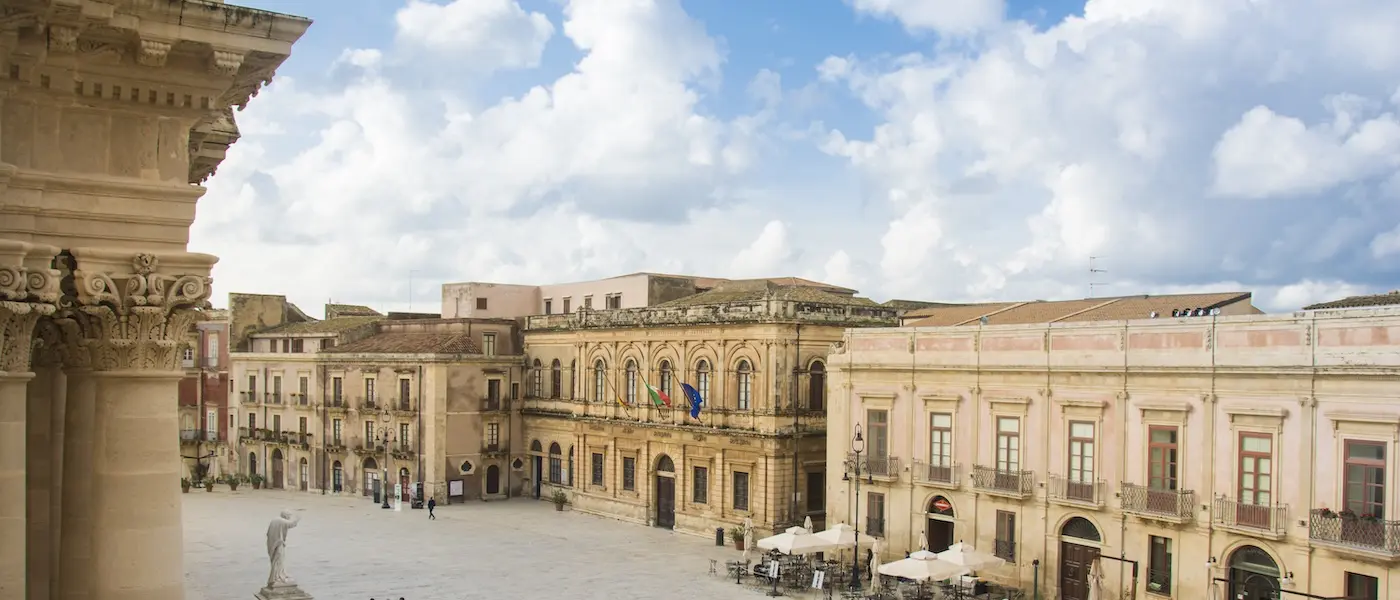
Immerse yourself in the rich history and culture of Syracuse, Sicily! Students in the 15-week semester enroll in four to five courses for a total of 12 - 16 U.S. semester credits. In addition to the required Italian Language & Culture and Directed Undergraduate Research courses, students choose one academic track—Art & Design, Interdisciplinary Mediterranean Studies, or Italian Studies—allowing them to tailor their program to their personal and academic interests. Courses supplement classroom learning with experiential projects and guided field trips to iconic sites such as Greek temples, local markets, and world-class museums, offering hands-on opportunities to explore Sicily’s diverse heritage while connecting with the local community
Highlights
- Unique site visits integrated into courses
- Spend your summer on the Italian island of Sicily, living like a local in a student apartment
Program Dates
January 28, 2027 – May 15, 2027
Application open until: October 1, 2026
Application Requirements
Complete online application
Personal statement (300-500 words)
Official transcript
Passport scan (photo page)
Italian privacy consent form

Eligibility Requirements
Age: 18+
Academic Year: High school graduate or above.
Cumulative GPA:* 2.5 (on a 4.0 scale)
* contact SAI if you don’t meet requirements
Interdisciplinary Mediterranean Studies
Italian Studies
This advanced painting course refines technical skills and develops a distinctive artistic voice. Students explore color, composition, and materials, moving from observational to abstract expressions. Through critical discussions and research, they create a series of works and an artist statement, positioning their practice within a broader context.
This course examines the evolving nature of photography in the digital era, focusing on post-photography and networked images. Through a combination of theoretical lectures and case studies, students will explore how contemporary artists challenge traditional photographic practices, redefining the medium in response to digital technologies and online platforms. The course emphasizes critical analysis and practical applications, equipping students with the skills needed to interpret and engage with contemporary image culture. Assignments will include the creation of a photo book, a conceptual short film project, and a multimedia installation, allowing students to experiment with different narrative structures and presentation formats.
This course is intended for students who have already begun developing an artistic or research-based approach to photography or related visual disciplines. While prior experience in photography is beneficial, the course welcomes students from diverse creative backgrounds interested in expanding their critical engagement with visual media. Participants should be prepared to present one of their project for analysis and refinement.
Taking inspiration from Lars von Trier’s film The Five Obstructions, the course is organized into four key stages, each designed to push students beyond their conventional practices. Assignments will require students to reinterpret and recontextualize their projects through different theoretical frameworks and technical approaches, effectively putting their work through a “stress test” that challenges both conceptual and aesthetic boundaries.
Far from Sight, Close to the Heart is a course in Artisanal Fashion and Experimental Design that offers an in-depth exploration of craftsmanship through a hands-on approach, bridging heritage techniques with contemporary design. Rooted in Sicily’s rich textile traditions, the course guides students through an immersive material research process, technical experimentation, and creative development. From the study of Sicilian cotton cultivation to embroidery and historical costume analysis, participants will engage with expert artisans, visit specialized workshops, and experiment with textile manipulation techniques.
During the course, students will be guided through the design process of a personal creation, applying techniques learned from local artisans. The final works will be presented in a collective exhibition, showcasing each student’s creative journey through visual storytelling and material experimentation.
In this course, students acquire the foundational skills needed to build their own artistic development in the field of ceramics, engaging in a process that is inherently experiential and hands-on. Through the careful selection of clays, mastery of decorative techniques, and skillful interaction with elements such as fire and oxides, students are introduced to a vast spectrum of conceptual and decorative possibilities. These techniques enable exploration and experimentation that are essential to the art of both sculptural ceramics and pottery, allowing students to develop a unique approach that combines traditional craftsmanship with personal artistic expression. This course thus encourages students to embrace ceramics as a functional medium and a dynamic art form that supports both creative freedom and technical proficiency.
This course offers a comprehensive introduction to the art and craft of costume design, blending historical, theoretical, and practical approaches. Students will explore the evolution of costume through a series of theoretical lessons that delve into the history of fashion and its role in shaping cultural narratives, with a particular focus on its application in Theatre and Cinema.
Through hands-on exercises, participants will be guided in mastering the principles and elements of costume design, learning how to translate ideas into visual narratives. Emphasis will be placed on the development of rendering techniques, as well as research methods, to effectively communicate design choices both visually and verbally.
This course investigates visual culture through the lens of decolonial and postcolonial theory, emphasizing the collective dimensions of iconography as a means to interrogate and reinterpret contemporary imagery. Through studying key texts by Edward Said, Homi Bhabha, and Gayatri Spivak, students will engage with foundational postcolonial concepts such as cosmopolitanism, diaspora, and the enduring legacies of colonialism in visual representation.
Drawing on methodologies from visual studies—a multidisciplinary field encompassing iconography, anthropology, cultural studies, and media studies—the course examines how images shape and are shaped by histories of power, colonialism, and resistance. Students will gain the tools to analyze, interpret, and challenge dominant visual narratives.
Central themes include the politics of public art, the resignification of contested monuments, and the global migration of symbols and allegories. Through a combination of lectures, case studies, and critical discussions, students will explore the transformative potential of visual narratives, rethinking their role in shaping collective memory, identity, and cultural power dynamics.
Unraveling Cartographies is a research-based course that uses sensory art and alternative mapping methods to examine the complex and layered interactions between humans and the environment, focusing specifically on the Augusta-Priolo-Melilli area (located just north of the city of Syracuse), home to one of Europe’s largest petrochemical complexes, which remains largely unknown to the general public, yet unveiling an invisible Sicily—one that is both fascinating and haunting in its contrasts and paradoxes.
Through participatory and narrative cartography, students will engage with local knowledge to map not only the physical landscape but also the history, collective memories, and sociopolitical dynamics that define the area. Mapping will be used as a critical tool to bring together art and design with social and environmental sciences to explore interdisciplinary ways of documenting, understanding, and reimagining complex territories affected by industrialization and environmental degradation.
A key element of this course is the body as a mapping agent. Students will be encouraged to experience the landscape not just through observation, but through participation: the physical act of being in the space, sensing it, internalizing it, and listening to the stories of its inhabitants will become part of the archival process, capturing not just the tangible, but also the non-tangible aspects of the landscape.
This approach moves away from purely data-driven mapping and emphasizes the personal, embodied experience of place—where all that is seen, heard, photographed, written, and traced is of equal value.
The course will emphasize the co-creation of knowledge, providing students with various tools and methodologies to map the territory and create multiple and intertwined narratives, which will be gathered in a collective publication and/or multimedia installation as the final project of the course.
We all leave traces—whether through movement, communication, listening, eating, or simply living. The traces imprinted in the urban landscape contribute to altering and shaping its identity over time. Starting from the idea that crafting letterforms is deeply intertwined with the memory of a place while holding the potential to develop a new symbolic language, during this course students will collect these traces within the specific urban environment of Syracuse and use them as inspiration to create an original analog typeface. This typeface will then serve as the foundation for poetic and visual compositions that reimagine the identity of a place, making it more coherent with its authentic character.
Through hands-on activities, students will gain the skills necessary to conceptualize and design an original typeface, developing practical notions to design and technical understanding of type as an expressive and functional tool.
Throughout the course, students will develop a series of expressive typographic compositions, showcasing their custom-designed typeface in poetic and pictorial formats. These compositions will explore the interplay between form, space, and meaning, reflecting the identity and character of the urban traces that inspired them.
Taking chances, making mistakes, playing, going beyond your limits, and being free are all essential steps in developing your imagination, language, and artistic voice.
This course is structured around a series of theoretical lectures and practical exercises aimed at building solid technical foundations as a starting point for a deeper stylistic exploration. Find Your Own Voice is designed to help illustrators and designers refine and strengthen their unique artistic identity—both in analog and digital illustration—while also equipping them with the skills to manage a complete project from concept to final presentation.
Through hands-on exercises and research, students will gradually assemble an artist’s sketchbook, a visual diary that documents their stylistic evolution and personal creative process. The final project will focus on designing a music album cover, a piece that will serve as the emblem and culmination of their artistic journey, reflecting the distinct voice they have developed throughout the course.
This structured approach will guide students in refining their artistic expression by working on technique, materials, composition, and color palettes, while also encouraging them to explore new possibilities and push beyond their creative comfort zones. In addition to artistic and stylistic growth, the course fosters essential professional skills by simulating a real commissioned project, allowing students to experience the full process—from conceptualization to final proposal—while learning how to effectively communicate their creative choices.
The course provides a comprehensive understanding of digital photography encouraging students to combine personal aesthetic choices with technical skills to create a personal photography project on a topic of their choosing. Students will expand their knowledge and creative skills through fieldwork, critique, readings, and photography assignments. From concept to capturing to presentation, they will understand the meaning of creating visual stories with photographs while exploring how their work can become a zine.
How does an analog camera work? How does photographic material work? What do you need to know to develop and print traditional black-and-white films? What is a view camera, and how does it work? We will explore the essential concepts and techniques for using the photographic medium with confidence and in a creative, expressive way. Students will develop a working vocabulary of basic analog photography, allowing them to interface with the darkroom workflow and the technical aspects of their camera. They will cover all basic black-and-white processes, from film development to darkroom printing. A special focus on view cameras will give the students a different approach to photography. In the final part of the course, students will implement their greater technical know-how and more critical eye into developing an individual work exploring the most secret and unknown spots of Siracusa. The final aim is to create a choral project and an end-of-course exhibition.
The course covers the fundamental theory and techniques of digital photography, exploring the functionality of DSLR cameras as well as the latest mirrorless models. Students will also learn to use the Adobe Photography Suite, gaining a solid foundation in Photoshop and Lightroom.
Throughout various shooting sessions, the course will introduce the main portrait lighting schemes, which students will learn to replicate in the studio and outdoors. They will also become familiar with essential photographic equipment, such as reflector panels and diffusers.
In the final part of the course, students will apply their enhanced technical skills and refined critical eye to developing an individual project exploring hidden and lesser-known corners of Siracusa. The ultimate goal is to create a collaborative project culminating in an end-of-course exhibition.
Representation is the primordial tool for translating and visually communicating thoughts and ideas, as well as interpreting reality deciphered through a graphic code. Drawing is an instrument that facilitates understanding the logic of forms, their nature, and the principles defining their essence, allowing their secrets to be translated into additional transmittable codes. Representation, as a medium of visual communication, is primarily a language – a language enabling experimentation with expressions and attitudes, as well as the dissemination of knowledge, information, and intentions.
This course aims to stimulate students’ progressive awareness of the exploratory potential of representation as a visual expression of ideas and a means of decoding visual data. Beginning with transcribing reality through the practice of hand drawing from life, the observation of the reality of forms provides an opportunity for students to develop abstract thinking in representation. This allows them to transform stimuli, intuitions, and creative tensions into precise project data.
Drawing from Life
Drawing becomes a practice of “registering” reality when used in situ, often utilizing a travel notebook (carnet de voyage) to collect observed, transcribed, and reinterpreted elements of the world.
This course invites students to practice observation and interpretation of their surroundings, focusing on everyday objects, urban and natural landscapes, architectural details, and the habits and customs of reality. Through the observation and description of reality, students will deepen their understanding of how individuals, across time and space, have established meaningful relationships with nature and artifice.
Investigating and representing reality through drawing thus becomes a moment of “pause” and “reflection,” allowing for a deliberate selection of information that captures the uniqueness of places. This practice fosters memory-building, creating a valuable reserve of insights that indirectly supports a culture of design and creativity.
The course includes multiple sessions with progressively complex exercises. The introductory session provides a theoretical and technical overview of life drawing, followed by nine exercises. Students will explore challenges in comprehending and representing the forms of reality, including everyday objects, archaeological artifacts, urban and architectural details, and landscapes.
Sicilian handicrafts have long been linked to folkloric and traditional imagery. However, a contemporary movement is reimagining these cultural symbols, transforming local materials and techniques into products that speak a global language. This course invites students to explore and analyze Sicilian materials and production methods, reinterpreting them through developing a product or a small collection of objects. Students will design and create prototypes that bring fresh relevance to Sicilian craftsmanship in a modern, international context.
Throughout the course, students will learn about Sicily’s rich artisan history by examining traditional creations such as ceramics, textiles, and decorative crafts. The curriculum combines lectures, hands-on workshops, and visits to local artisan studios and museums, including the Ecomuseo di Interesse Regionale “I Luoghi del Lavoro Contadino e dei Mestieri” (The Regional Ecomuseum of Rural Labor and Crafts), offering an ethnographic itinerary through the towns of Buscemi and Palazzolo Acreide. Students will also visit the Mulino ad acqua “Santa Lucia”, a historic water mill in Palazzolo Acreide, for an immersive experience in traditional production techniques. Guest lectures from renowned Sicilian artisans will further immerse students in the cultural and technical heritage of the region.
As students develop their own designs, they will learn to balance historical and cultural significance with the demands of contemporary design and sustainability, considering how traditional methods can be adapted for today’s global market. Projects will encourage students to explore sustainable design principles, aiming to create innovative yet culturally respectful reinterpretations of classic Sicilian forms.
* Please note: Counts for the International Migration Studies Certificate
This immersive course explores the concept of “slow life” through the lens of movement-based performance art, focusing on the therapeutic and psychological benefits of the Mediterranean lifestyle. Participants will explore the natural elements of the Sicilian territory, using these resources to embark on a therapeutic journey that connects mind and body. Through movement therapy in open spaces, sound healing in nature, hands-on scenic design using recycled materials, and meditation practices, students will engage deeply with the region’s cultural heritage. Exercises such as “Colors of Emotions”, “Painting in Movement”, “Scenographic Expression”, “The Stage as a Three-Dimensional Space”, “Performer as a Scenic Element”, and “Emotions of Interactive Scenography” will guide participants through a holistic exploration of self and environment. The course culminates in a final performance, integrating all explored elements, to be shared with students of the local academy and the broader community.
This immersive theatre and storytelling course focuses on the development of creative performance skills through the exploration of personal, contemporary, and historical narratives. Through a collaborative process, participants will construct a collective collage of stories, using diverse local settings to inspire and shape their work.
Activities will take place in various evocative locations, including the Archaeological Park of Neapolis, the historic island of Ortigia, and the coastal landscapes of Siracusa Alta.
The course provides an opportunity to push creative boundaries, engage with diverse storytelling forms, and experiment with site-responsive performance techniques in characteristic and historical environments of Syracusa, exploring the intersection of history, space, and narrative in a dynamic creative process.
The course offers an introduction to the art and practice of sound design, field recording, and the creation of soundscapes. Students will learn how to build sounds and sound effects from scratch, exploring the technical and creative processes involved in capturing, manipulating, and organizing sound to craft immersive audio experiences. Through both theoretical discussions and hands-on projects, students will develop an understanding of the narrative potential of sound across mediums such as art installations, dance, music and film.
Food serves as a fundamental link between the body and the landscape, shaping our understanding of the environment not as something external, but as an intrinsic part of our very composition.
This course offers the students a site-based understanding of sustainable food production practices in contemporary Sicily. Different aspects of sustainability in food systems (local production, zero waste, organic and regenerative agriculture, fair trade and wages, food production as a means for social integration) will be explored through a multidisciplinary and multisensory approach encompassing a historical overview of Sicilian food systems, field visits to local case-studies, artistic laboratories, cooking workshops, theoretical notions related to the multiple dimensions of sustainability.
Through an exploration of personal connections to land, food, and local traditions, students will reflect on their place within a complex, interconnected ecosystem, redefining the landscape as an extension of the self rather than a passive backdrop. They will experiment with their chosen medium to create a poetic and personal interpretation of the processes, field visits, and case studies explored. The course will culminate in a participatory, performative dinner – where eating becomes an act of shared responsibility and transformation – accompanied by the presentation of individual student works.
Cities are intrinsically linked with their spaces and what happens in them. Starting from the reality of spaces, we see the city as a stage for situations. Situations are a set of conditions: informally, accidentally, or potentially planned. The aim of the course is to question critically the realm of existing realities, changing the perception of the ordinary through an investigation of the anatomy of the space, built or not built, defined or not defined, connected or disconnected. We rely on the potential of design to reconnect broken spaces and reopen them to experience.
In this course, students will consider the unique relationship between spaces and the people who interact with them, analyzing the impact a setting can have on human activity and experience. As a case study, students will examine the spaces around Syracuse, analyzing how they shape their interactions with and impressions of the city. They will contemplate how the spaces in Syracuse interplay with behavior, customs, and daily life for the local community, tourists, and visitors. Students will then create their own designs, proposing adaptations to public spaces that could improve the human experience.
Coursework will involve theoretical context for urban planning as well as practical projects, utilizing critical thinking and creative problem-solving skills. Throughout the course, students will continually return to the concept of “design for change,” to build a deeper understanding of how creativity can impact society.
This course provides a comprehensive exploration of audiovisual language, guiding students through the technical, conceptual, and artistic aspects of digital video production. Structured in three phases – Research & Concept Development, Production Techniques, and Post-Production & Final Project – it encourages experimentation and the development of a unique artistic voice. Each phase will include a practical assessment to consolidate the skills acquired.
Phase 1: Research & Concept Development
Students will be introduced to the fundamentals of audiovisual storytelling, analyzing the relationship between image and sound, narrative structures, and visual composition. Through case studies, film analysis, and creative exercises, they will refine their ability to conceptualize and develop an original idea for a video project.
Assessment: Presentation of a video concept and storyboard, demonstrating a clear narrative structure and aesthetic approach.
Phase 2: Production Techniques
This phase focuses on the technical aspects of digital filmmaking, including camera operation, lighting, framing, and sound recording. Hands-on workshops will allow students to experiment with professional video equipment and software, fostering a deep understanding of audiovisual craftsmanship.
Assessment: A short filmed sequence applying key production techniques such as cinematography, lighting, and sound design.
Phase 3: Post-Production & Final Project
In the final phase, students will explore editing, color correction, sound design, and visual effects to enhance their video work. The course will culminate in the creation of a short experimental video (e.g., an art video, visual essay, or conceptual narrative), where students will synthesize their technical skills and artistic vision into a polished, original piece.
Assessment: Completion and presentation of the final video project, demonstrating storytelling ability, technical proficiency, and creative expression.
By the end of the program, students will have developed the ability to conceive, produce, and finalize a digital video project, integrating storytelling, technical expertise, and creative innovation.
This course investigates visual culture through the lens of decolonial and postcolonial theory, emphasizing the collective dimensions of iconography as a means to interrogate and reinterpret contemporary imagery. Through studying key texts by Edward Said, Homi Bhabha, and Gayatri Spivak, students will engage with foundational postcolonial concepts such as cosmopolitanism, diaspora, and the enduring legacies of colonialism in visual representation.
Drawing on methodologies from visual studies—a multidisciplinary field encompassing iconography, anthropology, cultural studies, and media studies—the course examines how images shape and are shaped by histories of power, colonialism, and resistance. Students will gain the tools to analyze, interpret, and challenge dominant visual narratives.
Central themes include the politics of public art, the resignification of contested monuments, and the global migration of symbols and allegories. Through a combination of lectures, case studies, and critical discussions, students will explore the transformative potential of visual narratives, rethinking their role in shaping collective memory, identity, and cultural power dynamics.
This course examines photography as a narrative tool for documenting landscape transformation in Sicily, with a focus on Siracusa and its socio-political context. Through walking, creative writing, and drawing, students will develop photography projects culminating in a collective publication or exhibition.
The course invites students to explore Sicily’s dynamic entrepreneurial landscape, focusing on the development of small businesses within local creative industries. Through class readings and discussions, students will examine how Sicily’s unique geographic, historical, and cultural context shapes innovation in local business ventures.
The curriculum covers the business development process, encompassing planning, marketing, financing, and operations. Case studies, guest lectures, and individual projects will provide students with a comprehensive understanding of the skills and steps required to successfully launch and sustain a small business.
Students will also explore the role of sustainability in business development, analyzing the environmental and climate-related challenges faced by Sicilian industries such as artisanal crafts, agritourism, winemaking, and more. Students will gain insights into the complex obstacles and opportunities small business owners face worldwide by investigating the interplay between tradition and innovation in Sicilian entrepreneurship.
Unraveling Cartographies is a research-based course that uses sensory art and alternative mapping methods to examine the complex and layered interactions between humans and the environment, focusing specifically on the Augusta-Priolo-Melilli area (located just north of the city of Syracuse), home to one of Europe’s largest petrochemical complexes, which remains largely unknown to the general public, yet unveiling an invisible Sicily—one that is both fascinating and haunting in its contrasts and paradoxes.
Through participatory and narrative cartography, students will engage with local knowledge to map not only the physical landscape but also the history, collective memories, and sociopolitical dynamics that define the area. Mapping will be used as a critical tool to bring together art and design with social and environmental sciences to explore interdisciplinary ways of documenting, understanding, and reimagining complex territories affected by industrialization and environmental degradation.
A key element of this course is the body as a mapping agent. Students will be encouraged to experience the landscape not just through observation, but through participation: the physical act of being in the space, sensing it, internalizing it, and listening to the stories of its inhabitants will become part of the archival process, capturing not just the tangible, but also the non-tangible aspects of the landscape.
This approach moves away from purely data-driven mapping and emphasizes the personal, embodied experience of place—where all that is seen, heard, photographed, written, and traced is of equal value.
The course will emphasize the co-creation of knowledge, providing students with various tools and methodologies to map the territory and create multiple and intertwined narratives, which will be gathered in a collective publication and/or multimedia installation as the final project of the course.
The Southern Mediterranean Basin has long been the cradle of world civilizations, from the first settlements in Jericho in 9000 BC to the complex interweaving of religions, economies, and political systems that have shaped the region. Sicily, as the gateway between Europe, Africa, and the East, has served as a crossroads for over 2,000 years, marking the frontier between Western civilization and other cultural spheres.
This interdisciplinary course provides an introduction to Sicily’s history and people through the lens of modern Migration Studies, exploring geographic, historical, philosophical, and political contexts. Students will engage with concepts of island and border through philosophical inquiry, drawing on the works of thinkers such as Gilles Deleuze, Toni Negri, and Giorgio Agamben.
Starting from seemingly basic questions such as “What is a map?” and “What is a territory?”, students will participate in a series of lectures and experiential workshops. Through these, they will critically analyze the region’s role as a contested space, its legacy of migration, and its ongoing significance in shaping contemporary global dynamics.
This course provides a comprehensive exploration of the history of the Mafia, with a particular emphasis on its cultural representations in cinema, art, and literature. Students will develop a critical understanding of the key historical events, figures, and narratives associated with the Mafia, while also examining how these elements have been portrayed and mythologized in various forms of media.
The Mafia system, which originated in Sicily, became a model for other criminal organizations in Italy and abroad after 1989. The course will trace the historical development of this phenomenon, with a particular focus on the contrasting narratives that emerge from the same events: factual history, legend, media constructions, and fictional portrayals.
The course will be divided into two parts: one focusing on art and cinema, and the other on literature. It will explore different modalities of narration, including those rooted in journalistic investigations and historical research, as well as those shaped by fictional narratives in literature and film. From both perspectives, students will gain a deeper understanding of key concepts such as “family,” “respect,” “honor,” and “blood oath.”
Students will be invited to engage with these different narratives by researching a specific historical figure associated with the Mafia. This research will involve a thorough investigation into the life, actions, and cultural impact of the chosen individual. For the final exercise, each student will embody their chosen figure in a creative dialogue modeled on the Impossible Interview format.
Through this fictionalized interview, students will reinterpret historical narratives and present alternative perspectives on the character’s life and legacy. This exercise will encourage them to explore different interpretations of historical events while also strengthening their ability to critically analyze and transform complex situations.
This interdisciplinary course is designed for students interested in history, cultural studies, literature, and film.
This course offers an in-depth exploration of Mediterranean anthropology, focusing on the intersection of environment, human development, art, and tradition in the region. Structured into three parts, the course integrates theoretical studies with practical workshops to provide students with a comprehensive understanding of the Mediterranean’s complex socio-cultural and environmental dynamics.
In this course, students will advance their understanding of anthropology through a series of thematic units, culminating in a practical, artistic lab experience designed to synthesize their learning at the end of the term:
Part I What is anthropology today? with Franco La Cecla
• Fieldwork, Observation, Comparative analysis Anthropological Methods
• Is there anything like Mediterranean Anthropology? Sicilian Specificity and difference with other parts of the Mediterranean?
• Art and Anthropology, artists as anthropologists and anthropologists as artists. Changing Practices, Changing Museums.
Part II Environment with Dr. Douglas Kenning
• Looking at humankind’s changing relationship to Nature in the ancient Mediterranean, watching our psychologies shift as civilizations develop, impacts intensify, and the climate fluctuates. A study in myth, story, history, archaeology, and climate science.
Part III “Time Machine – Landscape for Future” – Artistic laboratory
• Translating philosophy and anthropology into artistic practice
• Conceptual and visual research
• Practical artistic workshop & collective exhibition
Food serves as a fundamental link between the body and the landscape, shaping our understanding of the environment not as something external, but as an intrinsic part of our very composition.
This course offers the students a site-based understanding of sustainable food production practices in contemporary Sicily. Different aspects of sustainability in food systems (local production, zero waste, organic and regenerative agriculture, fair trade and wages, food production as a means for social integration) will be explored through a multidisciplinary and multisensory approach encompassing a historical overview of Sicilian food systems, field visits to local case-studies, artistic laboratories, cooking workshops, theoretical notions related to the multiple dimensions of sustainability.
Through an exploration of personal connections to land, food, and local traditions, students will reflect on their place within a complex, interconnected ecosystem, redefining the landscape as an extension of the self rather than a passive backdrop. They will experiment with their chosen medium to create a poetic and personal interpretation of the processes, field visits, and case studies explored. The course will culminate in a participatory, performative dinner – where eating becomes an act of shared responsibility and transformation – accompanied by the presentation of individual student works.
Sicily is home to some of the most active and geologically dynamic volcanoes in Europe, including Mount Etna, Stromboli, and Vulcano. These volcanic systems offer an extraordinary natural laboratory for studying the complex interactions between geological forces, ecosystems, and human settlements. This interdisciplinary course brings together volcanology, geology, and landscape photography, providing students with a unique opportunity to explore how volcanic activity shapes the environment and cultural history of the region.
Through a combination of scientific observation and artistic documentation, participants will engage in an in-depth exploration of Sicily’s volcanic landscapes, adopting a holistic and multi-scalar perspective and investigating how these territories have evolved over time.
Volcanology will serve as a lens to move beyond an anthropocentric perspective, situating human existence within the broader evolutionary history of the Earth, spanning long geological timescales.
The field expeditions will take students on immersive journeys across three of Sicily’s most significant volcanoes: Mount Etna, Stromboli, and Vulcano. Guided by expert volcanologists, students will engage in hikes and observational studies, analyzing differences in volcanic rock formations, eruptive behavior, and the ecological transformations unique to each site.
Visits to key observation points will facilitate discussions on the cultural impacts of volcanic activity, with opportunities to interact with staff from the National Institute of Geophysics and Volcanology of Catania (INGV) to explore monitoring techniques and data collection methods for seismic and volcanic activity in the area.
The course also includes an artistic and project-based component, incorporating photographic documentation as a method of both artistic and scientific inquiry. Throughout the fieldwork, students will be guided by a photography instructor, who will support them in developing a cohesive photographic series that captures their experience. They will have the opportunity to experiment with landscape photography as well as microscopy photography, closely examining volcanic rocks and minerals. The course will culminate in a public photography exhibition, where students will present their visual narratives, synthesizing the scientific and artistic dimensions of their exploration.
This course includes a three-credit lab component*. In addition to fieldwork and lectures, students will participate in laboratory and photography exercises to develop their own personal project.
*The lab component is available as a one-credit or three-credit module, allowing for flexible engagement with the photography module.
Students will explore the most significant works of Italian cinema, their historical role, and their cultural impact, with a particular focus on Sicily. They will analyze the contributions of influential figures in Italian film, including Luchino Visconti, Federico Fellini, Roberto Benigni, Franco Zeffirelli, and others. The course will examine the diverse film movements and styles that emerged in Italy from the mid-20th century to the present.
This course includes the development of basic conversational, reading, listening and writing skills. Focus will be given to the development of a vocabulary that will enable students to have simple but useful everyday conversations, which will be a support to their Italian experience. The course will give students the basic elements useful for everyday conversations, such as at the cafe, the train station, the post office, the restaurant, etc.
This level is for those students who already have an active knowledge of the elementary structures of the language (i.e. can express past actions and events and discuss future plans). Can communicate simple and routine tasks requiring an exchange of information on familiar and routine matters and understand clear standard speech regularly encountered in work, school, leisure, etc.
This course is directed towards the acquisition of more complex language structures in order to express personal opinions and preferences. This level enables students to enter unprepared into conversations on topics that are familiar, of personal interest, or pertinent to everyday life and current events, and to narrate simple stories.
During the course a revision of the entire Italian grammar studied until this point will be undertaken, studying in depth the basic grammatical themes. Priority will be given to conversation skills and increasing vocabulary to express oneself in depth, in situations pertinent to everyday life such as family, friends, hobbies, interests, work, travel, and current events.
During this course, students will refine their use of the tenses and moods using agreement, while studying in depth the use of some of the grammatical structures. Attention will also be given to improving the use of prepositions. Writing and listening exercises will be carried out with authentic material with specific attention to written expression.
In modern Italian literature writers from Sicily are among the most important. Informed by the culture of Sicily, its rich history, and its mythological legacy, the novels of Verga, Pirandello, Brancati, Vittorini, Sciascia, Monroy, Camilleri, and di Lampedusa talk about the human condition from a unique perspective. The lessons will present the writers, the literary texts, as well as films based on the novels. A workshop will involve students in a writing project. The course will examine the works of these key figures in either Italian or English translation. All students will be assessed on the following: active class participation, completion of required readings, assignments, exams, presentations, and a final paper.
During this course, students will study the art of Italian conversation. Taught entirely in Italian, this course empowers students to utilize their existing language skills and knowledge as they work to enhance conversational fluency through various activities and role plays. Students will also hone their listening skills, engaging in discussions with their peers and watching real Italian media – film and TV clips, podcast excerpts, music, etc. Students will have the opportunity to gain confidence in their speaking and conversational abilities as they learn more about Italian culture.
The focus of this course is on post-war Italy, the dynamics of the 20th century and their impact on the political and cultural structures of Italy. The course traces the history of Italy from the end of the Second World War and the subsequent foundation of the Republic to the present. It follows intertwined and occasionally divergent paths resulting in specific regional and social perspectives and attitudes towards the history of the country as a whole. Dichotomies and contradictions constitute one of the most interesting characteristics of Italy, one that is reflected in its complex and intriguing politics. Italian contemporary history will be analyzed from a Southern perspective. The “questione meridionale” (i.e. the peculiar problems of the South of Italy, and its supposed backwardness) will be addressed as the result of European colonialism and the story of the subaltern classes of the South. The course is based on a standard history text of Modern Italy. During the lectures, discussions and assignments will integrate primary cultural, literature, musical, and cinematic sources. The students should know in advance the films included in the filmography.
Schedule
Students enroll in four (4) to five (5) courses over the 15-week semester and earn a total of 12 – 16 U.S. semester credits. The curriculum includes two required courses designed to support students’ academic success and cultural integration from the very start of the program.
Required Courses
- Italian Language & Culture (First 4 weeks / 3 credits): Offered at all proficiency levels, this intensive course begins immediately upon arrival. Students complete a four-week Italian Language & Culture course to build foundational language skills and cultural awareness, preparing them to engage confidently with the local community throughout their time abroad.
- Directed Undergraduate Research (Full semester / 3 credits): This semester-long course strengthens students’ understanding of research methodologies while supporting the development of individual research projects aligned with their academic and professional interests. Students gain hands-on experience and build essential research and analytical skills applicable across disciplines.
Academic Tracks & Areas of Study
Students will choose one of three tracks, detailed below, in addition to the two required courses listed above. Each track has two (2) or three (3) courses and allows students to hone their academic focus while in Syracuse.
- Art & Design Track: Designed for both fine arts and design majors as well as non-majors, this track offers a multifaceted academic experience through a wide range of accredited courses. Areas of study include Design such as Graphic, Fashion, Sound, Product, Interior, Set Design, and Urban Planning, as well as Fine Arts, including Painting, Drawing, Sculpture, Videomaking, and Photography.
- Interdisciplinary Mediterranean Studies Track: Offers a multidisciplinary exploration of the Mediterranean world through both ancient and contemporary perspectives. Coursework includes fields such as Anthropology, Classics, History, Gender Studies, Philosophy, Sociology, Environmental Studies, Economics, Geography, Political Science and International Relations, and Urban Studies and Planning. This track provides students with a broad understanding of Italy and Sicily’s historical development and modern identity.
- Italian Studies Track: Sicily has played a central role in the development of Italian culture, making Syracuse an ideal setting for Italian Studies. This track explores Italy’s history, literature, cinema, and cultural traditions within a city where students actively engage with the local community in Italian. Students with sufficient language proficiency may choose to enroll in Italian Studies courses taught in Italian. As they deepen their understanding of Italian culture, students also strengthen their language skills through Italian language courses offered at all levels.
Courses Registration
Students select courses as part of the enrollment process by completing a course selection form. Course schedules are confirmed 4 weeks prior to the program start, and finalized schedules with class days and times are provided at orientation.
| Pre-Departure Calendar | |
|---|---|
| October 1 2026 |
Application Closes Applications accepted after closing as space permits. |
| Within 1 week of acceptance |
SAI Deposits Due $500 Enrollment Deposit (applied toward program fee) $300 Security Deposit (refundable) |
| October 1 2026 |
50% of Total Program Fee Due Students who are accepted and submit SAI deposits after this date will have an amended pay schedule. 50% of the Program Fee will be due within 5 business days, based on the deposit payment date. |
| October 15 2026 |
Financial Aid Agreement & Financial Aid Program Deposit Deadline Students wishing to utilize SAI financial aid payment deferment must complete the Financial Aid Agreement form and submit the Financial Aid Program Deposit by this date. Students whose deposit payment date is on or after this date will have a deadline of 5 business days after the deposit. |
| October 15 2026 |
Enrollment Closes Students must complete their enrollment, including paying deposits, by this date. |
| October 15 2026 |
SAI Scholarship Application Deadline Students wishing to apply for a SAI scholarship must have all application items submitted by 11:59pm Pacific Time on this date. |
| November 15 202 |
SAI Financial Aid Verification Deadline Students wishing to defer payment until financial aid disbursement must submit the financial aid verification form to SAI by this date. |
| December 1 2026 |
Balance of Total Program Fee Due (For students utilizing SAI financial aid payment deferment, any balance not covered by aid is due) |
| On-Site Calendar | |
|---|---|
| January 28 2027 |
Arrival & Housing Check-in Students arrive at Catania-Fontanarossa Airport (CTA). SAI airport pickup is provided between 10:00am and 3:00pm, and students are transferred to SAI housing |
| January 29 2027 |
Academic Orientation & Welcome Events |
| Coming soon |
Classes Begin |
| Coming soon |
Classes End |
| May 15 2027 |
Program End & Housing Check-out Students must move out of SAI housing by 10:00am to return home or pursue independent travel. |
| SAI Program Fees* | USD |
|---|---|
| Application Fee | $120 |
| Security Deposit Refundable at the end of the term. |
$300 |
| Program Fee Includes tuition, standard housing and SAI 360° Services (see What’s Included). |
$17,200 |
| Optional / Additional Fees: | |
| Optional Private Room Housing Supplement Private room in a shared apartment or dorm. |
$2,400 |
| International Mailing Supplement When applicable, students are charged an international mailing supplement to ensure visa paperwork arrives in a timely manner. |
$90 |
*prices are subject to change
Please see SAI Policies for SAI cancellation & withdrawal deadlines.
Note: certain SAI-affiliated US universities require specific payment arrangements. These may require that some fees are paid by the student directly to SAI, and other fees are paid to SAI by the affiliated university on behalf of the student. If you attend a SAI-affiliated university please contact your study abroad office or speak with your SAI Admissions Counselor for details.
| Budget | Low Est. | High Est. |
|---|---|---|
| Airfare to/from Sicily |
$900 | $1,800 |
| Student Visa & Permit to Stay Fees May include optional SAI visa services, consulate fees, and potential travel expenses, which vary based on consulate location and the student’s residence. |
$300 | $1,500 |
| Books, Supplies & Course Fees |
$25 / course | $50 / course |
| Meals Combination of cooking at home and eating out. |
$600 / month | $800 / month |
| Personal Expenses | $250 / month | $350 / month |
| Transportation within Syracuse area Public transportation with some taxi rides. |
$50 / month | $100 / month |
| Weekend Travel Cost varies greatly by student. |
$300 / month | $1,000 / month |
This is a SAI 360° Services Program; it includes our full services!
- Program tuition and U.S. academic credit
- Accommodation in carefully selected student housing
- Airport pickup on arrival day
- Welcome reception and events
- Orientation to the host city and school
- On-site staff who foster a welcoming community for you and provide assistance when needed
- SAI Viva Experience: cultural engagement, excursions & wellness activities
- Student health insurance providing full coverage and medical emergency evacuation
- 24-hour on-site emergency support
- Farewell event
Pre-departure and Re-entry services
- Knowledgeable Admissions Counselor dedicated to you, providing friendly assistance
- Helpful pre-departure tools and resources
- Parent & family resources
- Online student groups to acquaint you with other SAI students
- Student visa advising
- Assistance with financial aid processing
- Need-based SAI scholarships
- Alumni Ambassador Program, with paid internship opportunities
- SAI alumni network
SAI offers all students the Viva Experience: frequent cultural activities, at no extra cost, for participants to get to know their community, city and country. Following is a sample of the activities included in this program. Please note that actual activities may differ.
Welcome Event
Welcome to Sicily! Students meet the on-site team as well as the other students in the program and sit down together for a Sicilian meal.
Visits to Archeological Sites and Museums
Discover the fascinating history of Sicily and Siracusa through its archeological sites and museums. Visit the Ancient Greek Theatre and Ancient Roman Amphitheatre in the Neapolis Archaeological Park. Check out the ancient ruins and artifacts displayed in the world class Paolo Orsi Archeological Museum. Walk amongst the first Greek temples in Sicily when you explore the historical layers in the ancient neighborhood Ortigia.
Boat tours and hikes in the natural reserves
Explore the natural beauty that Sicily is famous for, from its diverse coastlines to crystal clear seas. Visit nearby natural preserves, such as the Plemmirio Reserve and Vendicari Reserve for hikes, boat tours, and swims!
“Market to Table” Mediterranean cooking course
Learn about the cuisine of Sicily directly from a Sicilian chef! Explore the vibrant atmosphere of the historic Ortigia street market as you shop for supplies. Learn about the importance of eating fresh, local, and seasonal foods while diving into the unique cultural blend that makes up Sicilian cooking.
Day Trip to Mount Etna
Visit the captivating INGV center in Catania that monitors volcanic activity at Sicily’s majestic Mount Etna – the tallest active volcano in Europe. Learn about volcanoes from an expert volcanologist and then head to Mount Etna to experience it first hand. Learn about the role that Mount Etna has played in shaping all aspects of Sicilian history and life, including the fertile soil that creates the abundance of fruit and vegetables Sicily is so well known for.
Visit Noto, Sicily’s “Golden City”
Explore Sicily’s “Golden City” that was completely rebuilt after an earthquake in 1693 in the Baroque style. Enjoy a granita or other traditional Sicilian desserts at Noto’s famous pastry shop, Caffe Sicilia.
Day Trip to Taormina
Wander through the small historic center of one of Sicily’s most famous towns, Taormina. Enjoy stunning views of Mount Etna, visit the incredible Ancient Greek Theater, and explore the island and nature reserve of “Isola Bella.” Savor a sweet treat of granita at Taormina’s famous “Bam Bar.”
Weekend Excursion to Palermo
Travel to Northwestern Sicily to experience the vivacious capital and largest city of Sicily. Discover Palermo’s countless UNESCO World Heritage sites, such as the Royal Palace and Palatine Chapel, the churches of Saint John of the Hermits, St. Mary of the Admiral, and San Cataldo. Learn about Palermo’s history through food as you explore Palermo’s famous outdoor food markets, like Ballarò and Capo.
Farewell event
Say arrivederci to Sicily and the friends you’ve made as you enjoy one last dinner full of traditional Sicilian food in Siracusa.
Standard Housing: Student apartment
SAI student apartments are convenient and well equipped, with shared occupancy bedrooms. Typical residences house 2 – 8 students and contain a combination of private and shared bedrooms, kitchen, bathroom and living areas. Furnishings, a washing machine, basic kitchen supplies, bed linens and towels are provided. All apartments are equipped with wireless Internet. Housing configurations are designated as female, male, and in some locations, gender-inclusive.
Passports
Passports should be valid for 3 months after planned departure from Italy.
Student Visas
In accordance with Italian law, students studying in Italy for 91 days or more are required to obtain a student visa. Those with Italian/EU citizenship are exempted. Non-US nationals should consult their local Consulate for information on student visa requirements.
Depending on the consulate, students will either mail in their student visa application or appear in person to present their application to the consulate. Our Student Visa Office is available to assist students in preparing for the appointment; SAI Student Visa Consulting is part of the SAI 360° Services included in the program fee. SAI Student Visa Processing Service is available for select consulates only, for an additional fee.